







LIBRO INGLESE





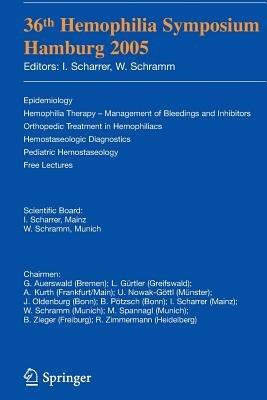
36th Hemophilia Symposium Hamburg 2005: Epidemiology; Hemophilia Therapy - Management of Bleedings and Inhibitors; Orthopedic Treatment in Hemophiliacs; Hemostaseologic Diagnosis; Pediatric Hemostaseology; Free Lectures

210,00 €
+2100
punti 
Venditore: Feltrinelli
Articolo acquistabile con Carta del Docente

Articolo acquistabile con Carta Cultura Giovani e Carta del Merito

Articolo acquistabile con Carta della Cultura

Paga con Klarna in 3 rate senza interessi per ordini superiori a 39 €

Dati e Statistiche
 Salvato in 0 liste dei desideri
Salvato in 0 liste dei desideri
36th Hemophilia Symposium Hamburg 2005: Epidemiology; Hemophilia Therapy - Management of Bleedings and Inhibitors; Orthopedic Treatment in Hemophiliacs; Hemostaseologic Diagnosis; Pediatric Hemostaseology; Free Lectures
Disponibilità in 2 settimane
210,00 €
210,00 €
Disponibilità in 2 settimane



About 31% of the patients with a factor VIII replacement therapy develop a factor VIII inhibitor.From these are 23% low-responder (< 5BE) and 77% high-responder (> 5BE) [8].In the case of severe hemophilia B,about 10.5% of the patients develop inhibitory antibodies [9]. Anti-factor VIII-antibodies are also seen in 15-78% healthy people without hemophilia [7, 17, 19]. Lacroix-Desmazes et al. [10, 11] showed anti-idiotypic antibodies neutralizing the inhibitory activity of the an- factor VIII antibodies in healthy people. Well-known predisposing factors for inhibitor formation are genetic features of factor VIII,which include large deletions,nonsense mutations or intrachromosomal recombinations [5, 23].Also, ethnic groups other than Caucasians (e.g.Africans) have a higher risk of developing inhibitors.Other risk factors are presumably de- ved from the immune system. For instance, a reduction of the inhibitor was seen with lower CD4+ T helper cell counts in HIV positive hemophilic patients [3,4].The development of inhibitors is very likely to be a Th-2 mediated event where cyto- nes and their receptors,T-cell receptors and the Major Histocompatibility Complex may also play an important role. Theoretical Background The substituted factor is an unknown protein for patients with a severe he- philia. Fig. 1. The normal immunoresponse (according to BAENKLER [2]) Abbreviations: TCR - T cell-receptor; APC - antigen presenting cell 36 I.Wieland et al.
-
Curatore:
-
Editore:
-
Anno:2006
-
Rilegatura:Paperback / softback
Pagine:
319 p.
Testo in English
Dimensioni:
235 x 155 mm
EAN:
9783540367147

Informazioni e Contatti sulla Sicurezza dei Prodotti
Le schede prodotto sono aggiornate in conformità al Regolamento UE 988/2023. Laddove ci fossero taluni dati non disponibili per ragioni indipendenti da Feltrinelli, vi informiamo che stiamo compiendo ogni ragionevole sforzo per inserirli. Vi invitiamo a controllare periodicamente il sito www.lafeltrinelli.biz per eventuali novità e aggiornamenti.
Per le vendite di prodotti da terze parti, ciascun venditore si assume la piena e diretta responsabilità per la commercializzazione del prodotto e per la sua conformità al Regolamento UE 988/2023, nonché alle normative nazionali ed europee vigenti.
Per informazioni sulla sicurezza dei prodotti, contattare productsafety@feltrinelli.it
