







EBOOK IN LINGUA STRANIERA





Memory

40,24 €
+400
punti 
Prezzo minimo ultimi 30 giorni: 37,85 €
Venditore: Feltrinelli

Acquista online
Scaricabile subito
Articolo acquistabile con Carta del Docente

Articolo acquistabile con Carta Cultura Giovani e Carta del Merito

Articolo acquistabile con Carta della Cultura

Dati e Statistiche
 Salvato in 0 liste dei desideri
Salvato in 0 liste dei desideri
Memory
Scaricabile subito
40,24 €
40,24 €
Scaricabile subito

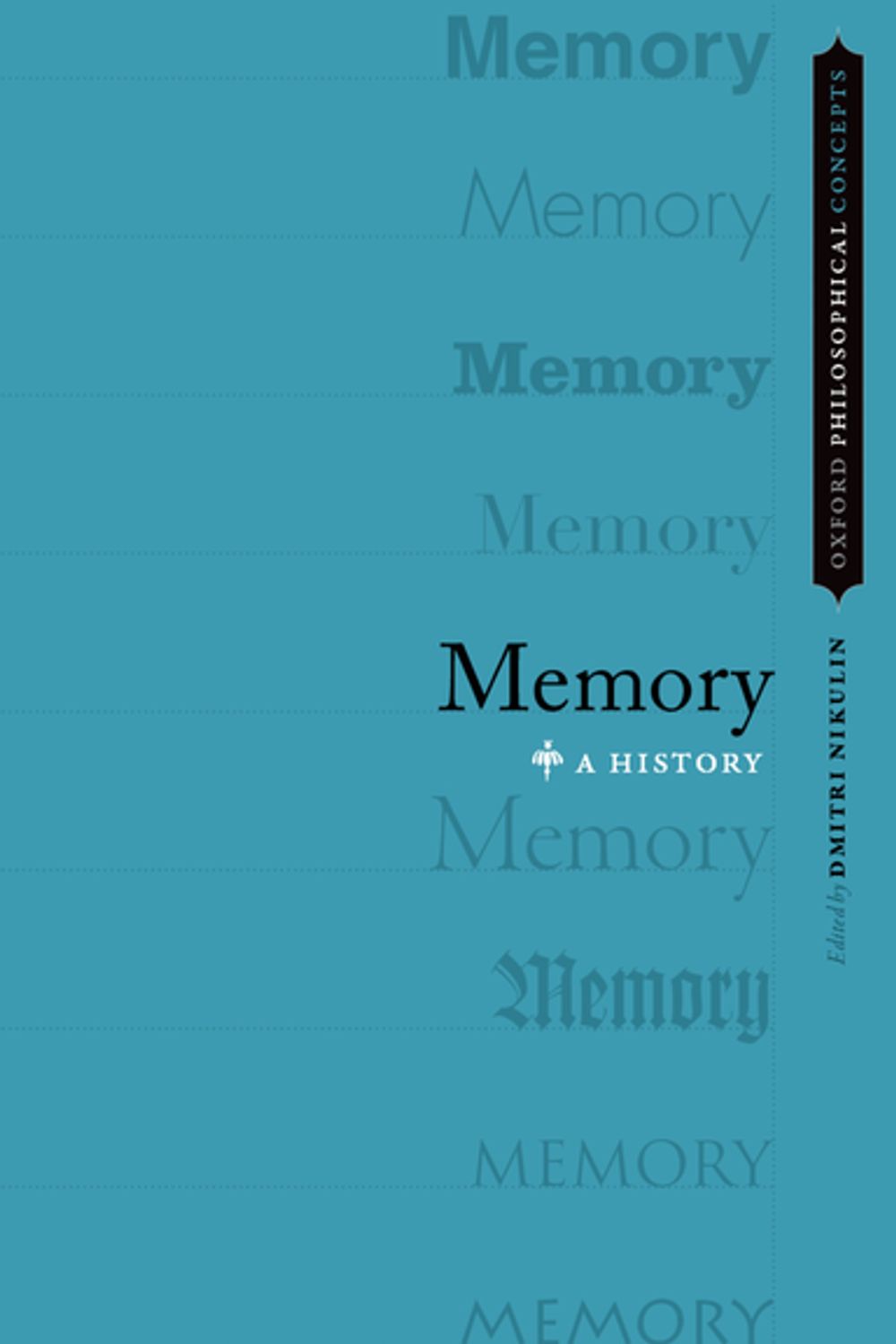



In recent decades, memory has become one of the major concepts and a dominant topic in philosophy, sociology, politics, history, science, cultural studies, literary theory, and the discussions of trauma and the Holocaust. In contemporary debates, the concept of memory is often used rather broadly and thus not always unambiguously. For this reason, the clarification of the range of the historical meaning of the concept of memory is a very important and urgent task. This volume shows how the concept of memory has been used and appropriated in different historical circumstances and how it has changed throughout the history of philosophy. In ancient philosophy, memory was considered a repository of sensible and mental impressions and was complemented by recollection-the process of recovering the content of past thoughts and perceptions. Such an understanding of memory led to the development both of mnemotechnics and the attempts to locate memory within the structure of cognitive faculties. In contemporary philosophical and historical debates, memory frequently substitutes for reason by becoming a predominant capacity to which one refers when one wants to explain not only the personal identity but also a historical, political, or social phenomenon. In contemporary interpretation, it is memory, and not reason, that acts in and through human actions and history, which is a critical reaction to the overly rationalized and simplified concept of reason in the Enlightenment. Moreover, in modernity memory has taken on one of the most distinctive features of reason: it is thought of as capable not only of recollecting past events and meanings, but also itself. In this respect, the volume can be also taken as a reflective philosophical attempt by memory to recall itself, its functioning and transformations throughout its own history.
-
Curatore:
-
Anno edizione:2015
-
Editore:
-
Formato:
Lingua:
Inglese
Compatibilità:
Tutti i dispositivi (eccetto Kindle) Scopri di più
Layout:
Reflowable
EAN:
9780190463540

Formato:
Gli eBook venduti da Feltrinelli.it sono in formato ePub e possono essere protetti da Adobe DRM. In caso di download di un file protetto da DRM si otterrà un file in formato .acs, (Adobe Content Server Message), che dovrà essere aperto tramite Adobe Digital Editions e autorizzato tramite un account Adobe, prima di poter essere letto su pc o trasferito su dispositivi compatibili.
Cloud:
Gli eBook venduti da Feltrinelli.it sono sincronizzati automaticamente su tutti i client di lettura Kobo successivamente all’acquisto. Grazie al Cloud Kobo i progressi di lettura, le note, le evidenziazioni vengono salvati e sincronizzati automaticamente su tutti i dispositivi e le APP di lettura Kobo utilizzati per la lettura.
Clicca qui per sapere come scaricare gli ebook utilizzando un pc con sistema operativo Windows
